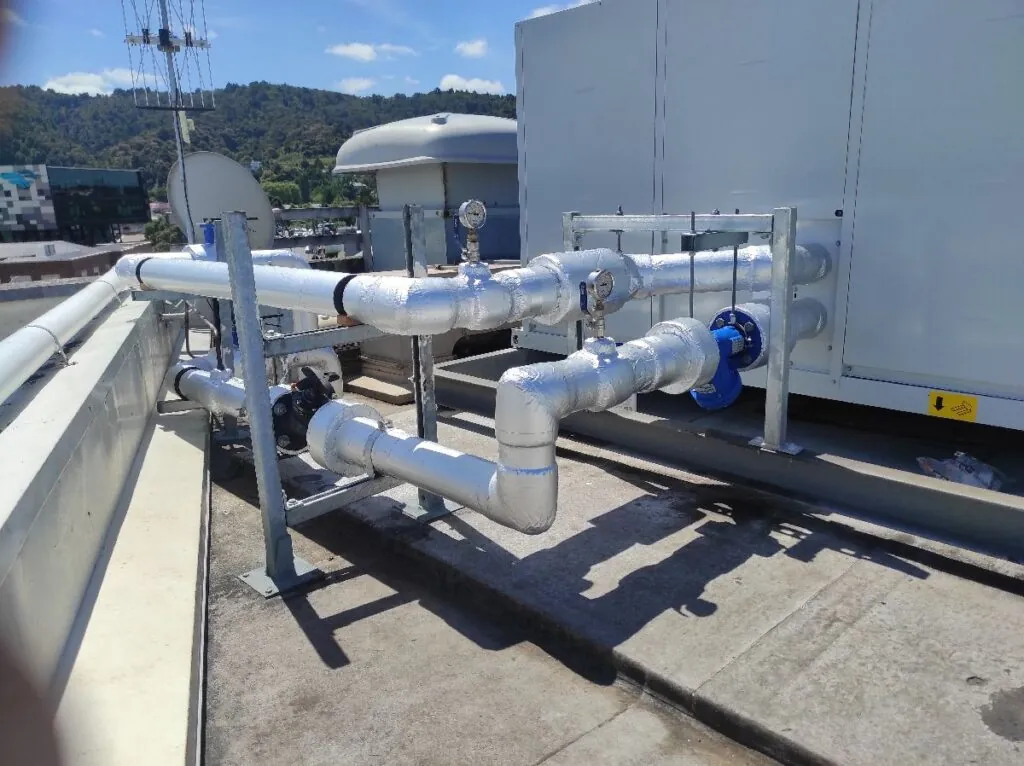
AUT Millennium Cooling Upgrade

Challenge

The existing water chiller had reached the end of its service life. Operating at only half capacity for over 18 months, it was no longer economical to repair and posed a significant risk to site reliability. While additional cooling systems had been added over the years, the original chiller remained central to the plant’s infrastructure. Without replacement, the site faced growing exposure to downtime during peak summer demand.

Solution

Replacing the chiller was not straightforward. The unit’s location meant a conventional crane could not reach, and access through the plant room roof was restricted to 2.2 m x 2.2 m — too small for the new equipment. The project required careful dismantling and disposal of the old chiller, enlargement of the roof opening, and removal of heavy components in multiple lifts.

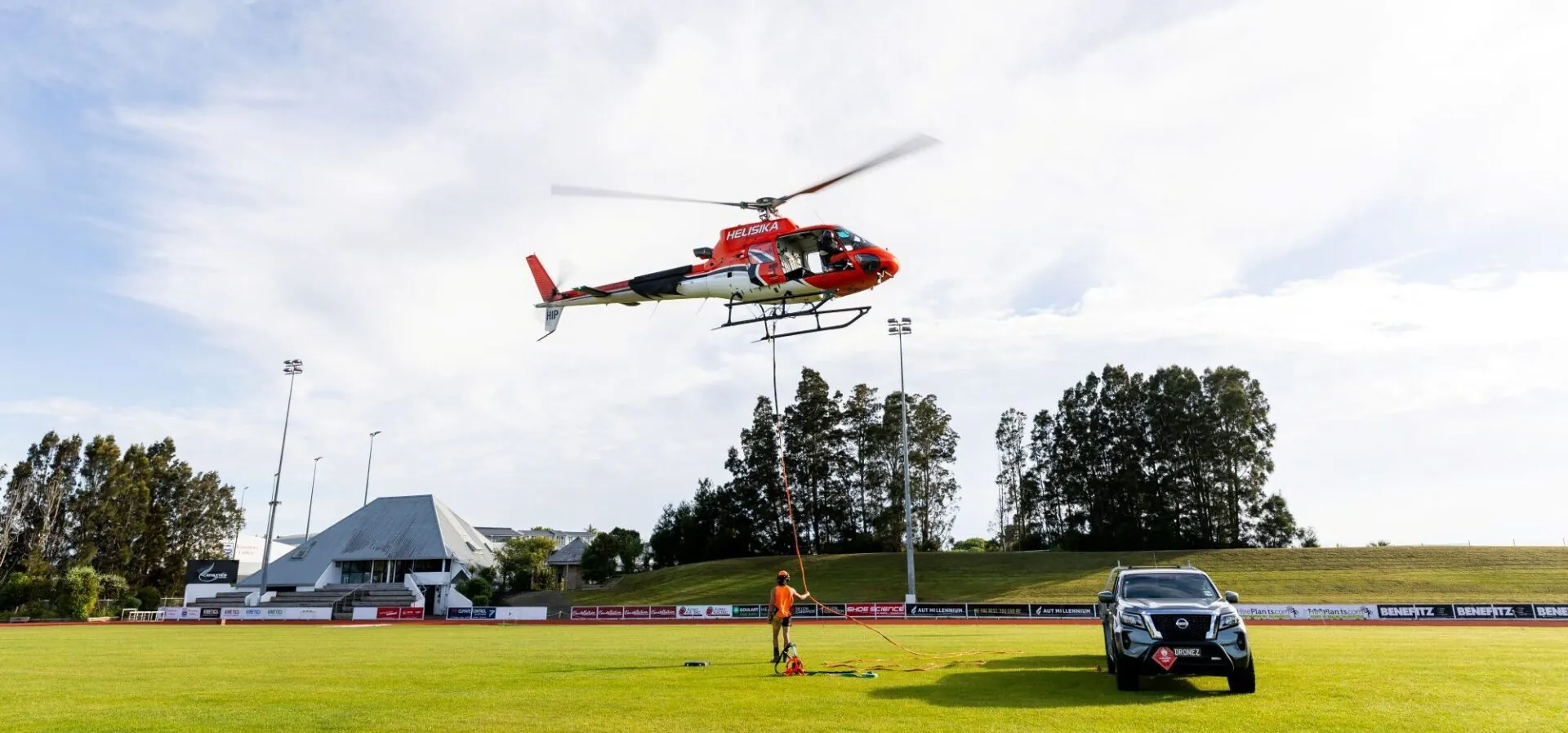
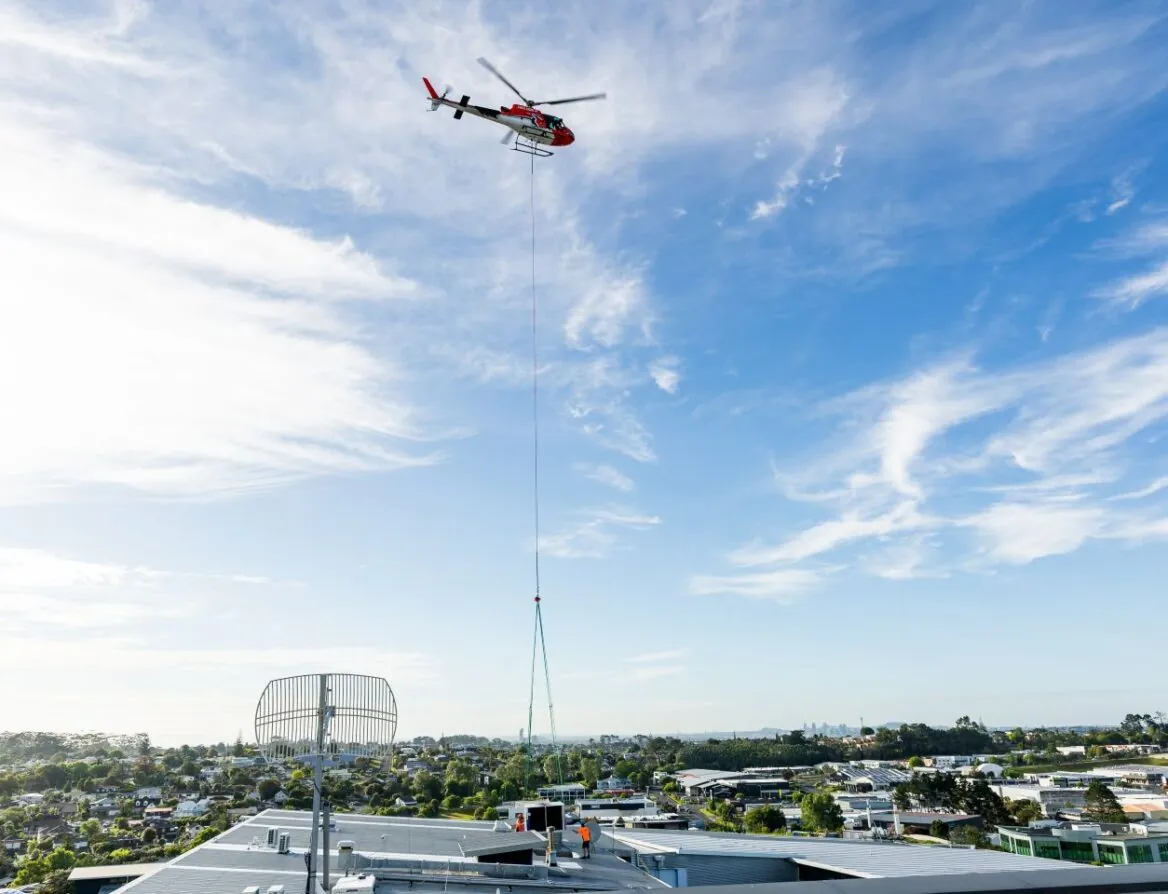
The solution was a helicopter installation, demanding meticulous planning and flawless execution. Every detail — from rigging geometry to flight path clearance — had to be measured and verified. The operation was scheduled for a clear Saturday morning to minimise disruption and ensure safe flying conditions. Pipework modifications and a raised platform were also required to integrate the new chiller seamlessly into the existing system.

Outcome

On the day, the helicopter lifts were carried out with precision. The old, heavy compressors were removed in one lift, and the new chiller was lifted and guided through the plantroom roof before being placed onto a pre-built custom Monkeytoe platform. The roof structures were reinstated, new polyethylene pipework installed, and the system fully commissioned.

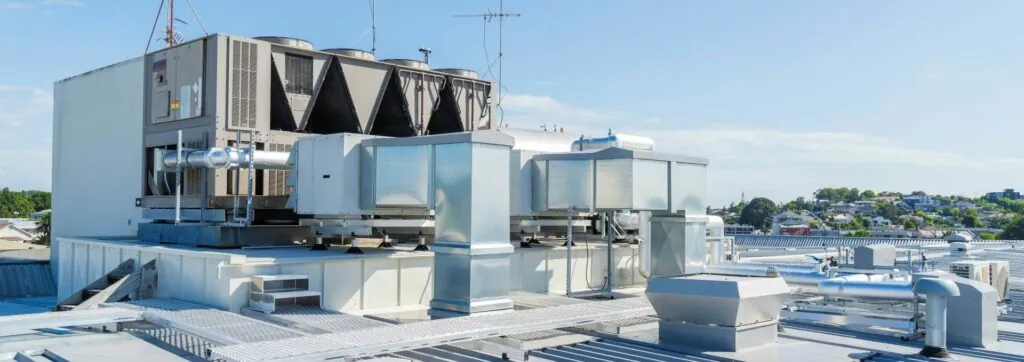
The result was a modern, right‑sized chiller solution delivering 157 kW of cooling with dual refrigerant circuits for redundancy. The elevated platform ensures easier servicing, while EnviroShield coil protection extends durability.

Through careful planning and innovative installation, the project overcame significant access challenges and delivered a reliable, efficient cooling system. The site now benefits from dependable performance, smarter controls, and improved serviceability — ready to meet future demand with performance.